A collection of writing from our talented writers, including poetry, creative writing, journalism and think pieces.
Sophie Spencer
Where Are the Great Novels of Joy?
Flicking through my battered copy of Donna Tartt’s The Goldfinch, I find the grief I thought worth preserving at sixteen. The book has travelled with me for years and looks suitably exhausted by the experience; corners of pages are folded down into soft little triangles, the spine broken from being opened too many times, beautiful sentences are underlined in the rainbow gel pens I owned back then. I was, apparently, very thorough. Pink and purple ink trails through the novel, bubbly little underlines that feel almost offensive given the subject matter. One particularly well-preserved passage reads: “But sometimes, unexpectedly, grief pounded over me in waves that left me gasping; and when the waves washed back, I found myself looking out over a brackish wreck which was illumined in a light so lucid, so heartsick and empty, that I could hardly remember that the world had ever been anything but dead.”
I remember loving sentences like that, the ones that seemed to put a name to some enormous, shapeless feeling I hadn’t yet worked out how to explain. So I underlined them and folded the pages, I made sure that if I ever came looking for them again, I would know exactly where they were. I was leaving a breadcrumb trail for some future version of myself who might need to find her way back, and there are so many of these markings scattered through the novel, that I can almost read my way back into the mind I had at sixteen.
Happiness, meanwhile, seems to have escaped my stationery entirely. There is no pink pen beneath “I had the epiphany that laughter was light, and light was laughter, and that this was the secret of the universe”; no folded corner for “I add my own love to the history of people who have loved beautiful things.” Apparently, joy was not something I thought I might need to find my way back to.
I kept flicking backwards and forwards after noticing this, half looking for evidence that proved me wrong. Surely I had underlined something happy. Instead, I found more sentences about losing things and wanting things and being unable to get them back. It started to feel almost comical, this little archive of misery I had diligently preserved for myself in gel pen. And I don’t think this means I was an especially miserable sixteen-year-old, or that I somehow valued being unhappy. Why was devastation the thing I had been looking for in the first place? Why did grief seem worth underlining while joy could be read once and left behind? The more I thought about it, the less this seemed like a habit particular to me; I think I had already absorbed the idea that these were the passages where the novel was saying something that was critical.
We do something similar when we talk about literature more generally; a novel about suffering is profound, whereas a novel about happiness is charming, or lovely. Have we conflated misery with depth? There is an assumption in the way we talk about literature that suffering shows the reality of life, that the writer who leaves us staring solemnly at the final page is the one who really understands us. Perhaps this is hardly surprising when misery is so deeply embedded in our idea of what quote unquote serious literature looks like. Think of the books we are handed when we are first taught what great literature is: Crime and Punishment, The Bell Jar, A Little Life, Of Mice and Men, The Great Gatsby… the list goes on, you get the gist. They are not united by genre, period, or even particularly by subject, but instead by the underlying suffering in all of them. Where, then, are the great novels of joy? Even writing that sentence feels faintly ridiculous, because it seems at odds with how we have learned to talk about great literature.
Perhaps, it is that suffering seems, on the surface, to be more complex than happiness. There is something to pull apart when it comes to misery; we want to know what caused it, what it has done to a person, whether they will ever escape it, blah blah blah. Joy is often much less obliging. Some of the happiest memories I have do not belong to the happiest periods of my life, and many of the days I would most like to return to are ones I hardly noticed while I was living them, and there was no revelation or swelling music to tell me that this was the bit I ought to remember. Could this be part of what makes joy so difficult to write about? Do we look for the big event or the happy ending, when really, so much of what eventually becomes happiness in our memories, are things that didn’t seem particularly significant at the time? Maybe the room was warm, or your friends were there, or you had nowhere you particularly needed to be, and maybe it is difficult to explain why you would want that exact evening back, only that you do.
Of course, there is a reason writers return to suffering. A happy person getting on reasonably well with their life does not immediately present much of a plot. There is a narrative need for something of a disaster to unfold within literature. Even in our own lives, the stories we tell our friends tend to begin at the point where the ordinary day stops being ordinary. When has anyone come home and announced that their train arrived on time? Conflict and suffering give a novel movement and stakes, so I don’t think the answer is to fill literature with people wandering around being delighted by things for three hundred pages. I’m not even sure I would want to read that. But perhaps we have allowed what makes a story move to determine what we think is significant about it. Suffering might provide the plot but it does not necessarily contain the whole life, and the catastrophe is worth telling because it changes something, but that does not necessarily make it the thing that mattered most.
Which brings me back, inevitably, to the sixteen-year-old with the gel pens. As an adult, I find myself back with The Goldfinch, flicking through those same pages again, except this time I am looking for something different. The misery is still there, of course, and I still think it is beautiful. My intention is not to make the opposite argument and pretend that we should stop writing about suffering, or that there is anything wrong with wanting literature that devastates us. I still love the sentences I underlined at sixteen. I just wonder now about everything I passed over, the laughter and the beautiful things, the moments of tenderness that apparently didn’t require a pink line beneath them to emphasise that they matter.
And maybe this is what literature can do with joy that I hadn’t properly considered before. Not give us a world scrubbed clean of grief, or guarantee that everybody gets what they want, but make us look properly at the parts of being alive that are easiest to pass over. Loving someone before you know you will lose them or being somewhere you don’t yet know you’ll spend years missing. These things are not profound despite being ordinary, and their ordinariness is precisely what makes them so difficult to hold onto. There are things worth knowing about being alive that cannot be found exclusively in grief, however beautifully it is written. Joy can tell us what we value before it is gone, or what makes a life feel briefly sufficient, and none of that seems particularly shallow to me. So I’m not going to stop underlining the sad bits. I suspect I’ll always be embarrassingly susceptible to a beautiful sentence about somebody having an awful time. But perhaps I’ll start underlining the other ones, too.
Isabella Sanger-Davies
Slieve Donard
It is an early August morning,
I have yet to reach the ancient town
Where stand the great Mourne mountains,
tucked away in C0unty Down.
The reverberating birdsong,
the chattering brook.
The peach laced bush,
and the dainty flower buds.

The foreboding slate path winds and bends,
and carries itself over the mountains ahead.
The branches of the ancient trees curl and lure me,
the aroma of the sweet-smelling heather chases the wind, it fills my nose.
Blackberry bushes, all around me.
Hues of red and blues, magenta and plum.
As I stand at the bed of the brook,
I place one on my tongue.

The lull of cream clouds in the sky,
I climb higher still.
The overcast skies are clearing,
my thoughts forgotten with them.
The wild ponies watch me pass.
I smile at them nervously.
I mean no harm.
I hope they know that.

Mossy stone walls.
In loving memory of.
We climbed so many mountains together,
curse these pesky bugs.
The frenzy of insects left behind.
The water feels so real today.
I often like to revisit.
This hazed memory of that place.

The salt from the sea air rises to me.
The evanescent Irish summer.
There is nothing tangible for me to hold.
But if I could hold this day,
I would pack it away neatly in my backpack,
and carry it down the mountain with me.
Leone Goate
On Being a Bad Reader
Previously I’ve been quick to dismantle a persons interests in favour of my own, creating a scenario in which I am the other. The correct other. As I pick up reading to fill my spare moments, I choose the dark academia titles, the philosophy books and witty essays. They feel sophisticated, and totally validating in the way that I flaunt the cover when opening up to my dog-eared page on the train. They feel like books you’d see a loved celebrity reading on their not so inconspicuous tube commute. The cover is worn and crinkled, casual enough to feel relatable but just that little bit wankier than everyone else- as though half heartedly flipping through 100 pages of French existentialism on the Jubilee line cements superiority between them and the average person. So I persevere through The Secret History despite how difficult and gruelling the task is.
I power on through because I am able to fantasise so vividly about scenarios which have not and never will happen. Picture this- the cool girl in the cafe’s face when she see’s what I’m reading. I imagine her eyes would light up, like she’s been waiting for this exact moment to happen. We slip into casual conversation instantly. I tell her ‘I think Donna should’ve written Richard’s character slightly differently’, or that ‘the ending underwhelmed me and was a real let down’. Of course I preferred daydreaming about these interactions to actually bothering with finishing the book. This faceless, nameless ‘cool’ girl who I’d conjured up (solely to monitor how my choices would be perceived) prances around my head. She scolds me for reading my 10 book romantasy series which averages 3 stars on Good reads, instead of cracking on with Pride and Prejudice. I convince myself she is right. Why on earth am I wasting my time when I could be half way through Jane Austen’s collected works by now! And inevitably when no one asks, I can gush about how rewarding the experience of pushing through a victorian romance is, because they ‘just don’t do it the same anymore’. Imagine how clever they will think I am. They say there is always a man in your head policing your thoughts subconsciously, but that man is a teenage girl who I’m trying desperately to impress.
The books I tend to pick up now do not teach me about ancient philosophy, nor expose me to complex prose. The themes are not overtly politically charged or even subversive in their genre. One day I realised I can do whatever I want and the pendulum swung. Hard. Predictable would be a generous description of what I gravitate towards now- they read like glorified fanfic, but I will quietly read 100 more under the covers whilst the blue light from my phone screen permanently burns my retina. There is no longer a need for me to perform my tastes because they are what make me, me.
I am a more open minded person and certainly more pleasant when I let go of my need to prove myself; gone are my days of literary judgement, overridden by my love for badly written fan fiction and self published romance books. I truly am in it for the love of the game. I will read anything with enough pages published, for a fandom I feel no connection to, and that’s the magic of it all. I read these not for the characters themselves but the humanity which leaks through in the writing. Sometimes the chapters are a little clumsy or cliche but that has become part of the experience for me. I could read 100 different versions of the same character and resonate with every single one. No longer do I wish to be the other, but feel the community of 1000 people all over the world waiting for the next part to be released. I started to fully experience joy when I finally stopped limiting my interests in fear of being perceived in a way which wasn’t controlled by me. There is no prize awarded to those who only do things for others instead of themselves.
Heidi McCulloch
Blue Morpho
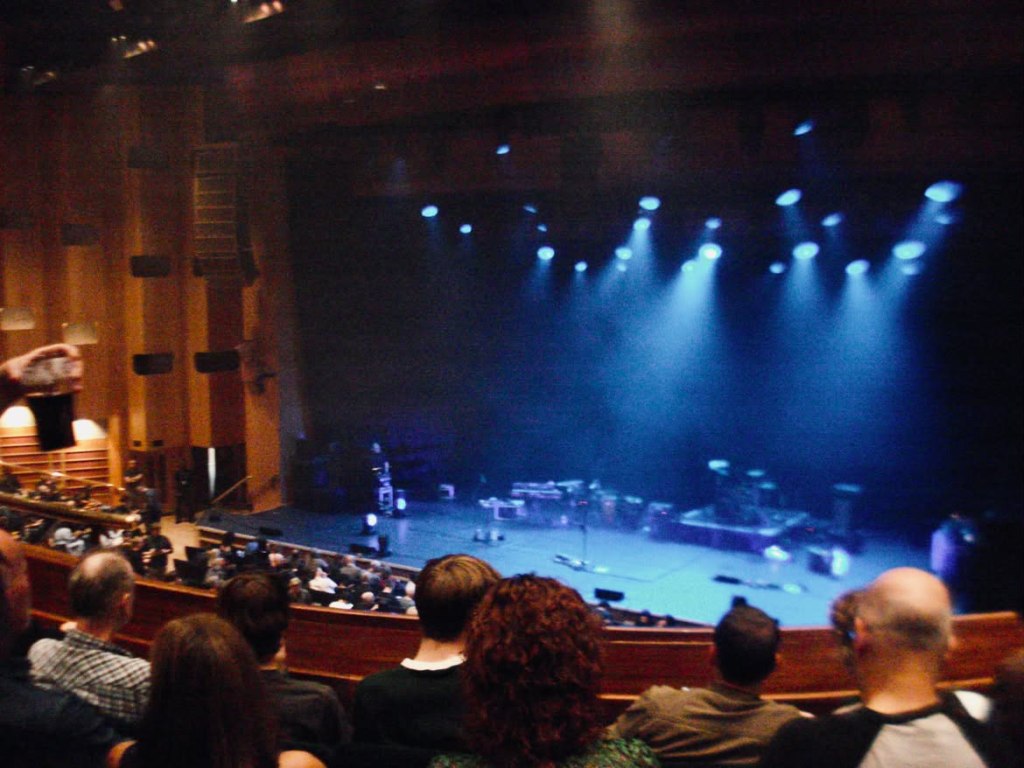
I went to see Ed O’Brien perform his newly released album ‘Blue Morpho’ in London, a trip I took with my mum. The album always felt elegiac to me, leaving me with that heaviness you feel after a cathartic cry. I sat in my seat and could already feel my eyes stinging with the promise of tears. I chatted to the girl to my right, two lukewarm beers clasped in our hands as we gushed about his previous work. The lights dimmed suddenly and a ripple of awed hush surged through the crowd and stunned us into promising silence. The session musicians walked on first, followed by the man who we all revered.
As the lyrics retired his mouth, his butterfly wings unravelled and the thrum of instruments surrounded him like a gauze. On stage he looked godly; Jesus-like. With his discipular band members by his side. The crowd his followers. His unshaven beard and wise eyes didn’t help.
We found a deep sojourn in Ed’s music. Between tracks, there were brief interludes where he would speak to us and we would all lean in close to listen, as if he was our best friend telling us a delicious secret. He would sit casually at the edge of the stage, letting his feet dangle over the side and tell us savoury anecdotes. He gave us the joy of his music, and we found joy in sharing it together. Love spread through the rhythmic thunder of our beating hands, audible elation. Everyone was a musician as we flapped our own wings to the rhythm and we bumped shoulders and exchanged knowing smiles. Our hearts were beating in sync, and we lifted our hands in the air as if in praise.
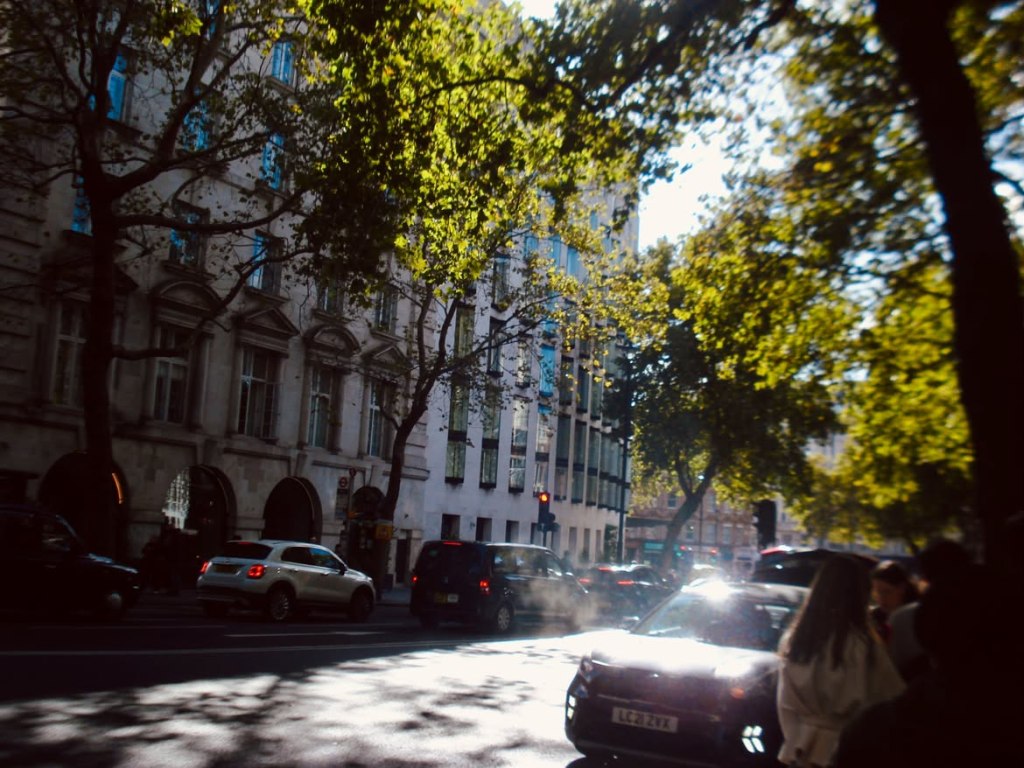
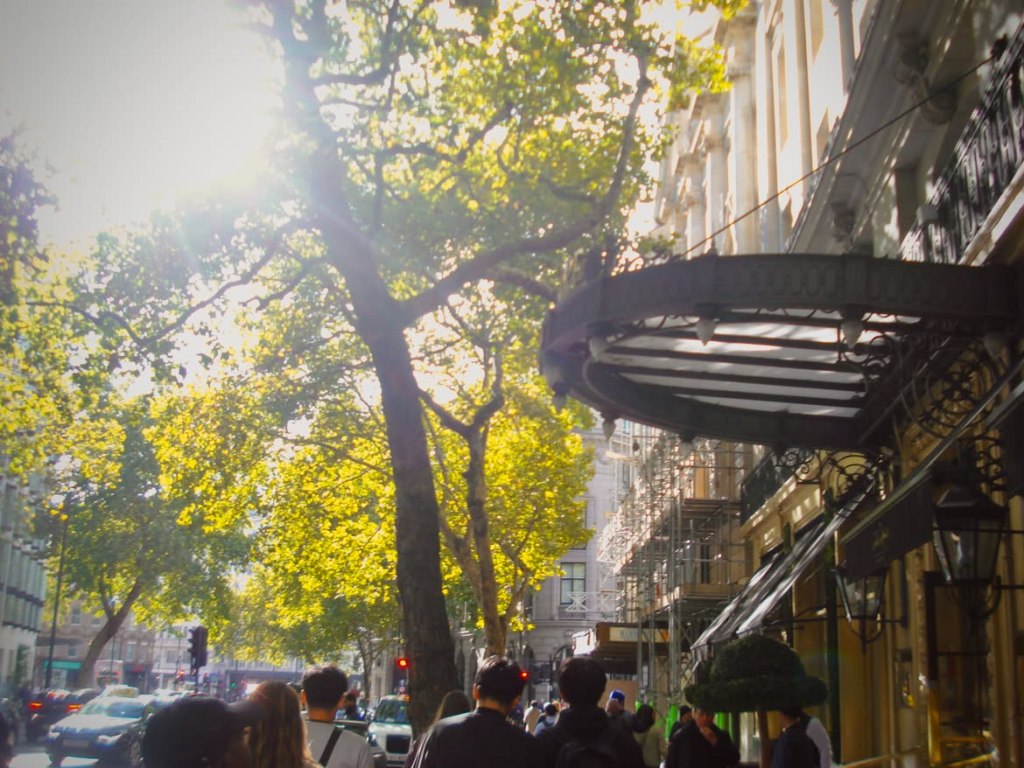
The next day, I met with a friend I hadn’t seen in a long time and shared the joy with her and with my much-loved Aunt and Uncle, who kindly let us stay with them for the weekend. I roamed the buzzing city streets on my own and regarded groups of friends, lovers, families. Saw them exchange jokes and watch their faces contort in hysterical laughter. Saw them share music and clasp hands. Saw them get lost in another’s words and forget about their surroundings. Now when I listen to the album, it holds a new meaning; something that used to be melancholic now feels optimistic. So, as Ed himself said, ‘open your eyes and see the beauty in the dark.’
Sean Denchfield
How to Stay Joyful in Winter and Swerve Seasonal Depression
As the year goes by and the weather gets bleaker, the daylight decreasing and the persistent British rain coming back to bite us after a long hot summer, there’s more and more talk about seasonal depression. Outside, the colours are changing as they annually do, leaves dry up and blue skies get covered in grey. All signs point towards hibernation, and we inherently feel ourselves craving a recharge and a tuck into bed until it’s warm and sunny again. Light is so important for our energy and mood as humans, yet, the schedule persists, commitments don’t falter with the serotonin spoon-fed to us by the brightness of the sun, and we have to just sentimentalise getting up and making a hot drink while it’s still dark in the morning to stay sane and make it to work, school, university, hobbies, social plans, everything.
Truthfully, summer is something I mourn in the back of my head 24/7 in the autumn/winter months. I look back on photos from festivals and beer gardens where my friends and I all look cosy in another way, wrapped in sunlight, heat and a tan rather than a coat, hat and gloves. In the summer, I get to display my favourite polos, shorts, t-shirts, caps and sunglasses after a night’s sleep above my duvet with the fan on, and as we roll into November, I’ve started to mourn that type of weather where you can’t roll a cigarette because your hands are too sweaty, not because the wind is thrashing your tobacco all over the place. Though, the beauty of these precious summer months is that they always come back, and they most definitely wouldn’t hit the same without the wait. You obviously can’t have light without darkness. I find it important to prioritise gratitude despite my seasonal preference; summer to me is like a situationship or friend or cousin or you don’t see all the time, but when you do you cherish them and miss them viscerally when they aren’t around. As I say though, gratitude is what wraps the year together and many things soothe me in these next few months and make me miss winter and autumn when they aren’t around too. Despite these seasons’ flaws you have to take in their qualities and cherish them for more specific reasons. Summer and spring are a bit overrated anyway, like a bit of a crowd-pleaser you can’t fully grab the attention of but you like them regardless, whereas winter and autumn are like a friend you have to work very hard to bond with but it all pays off.
And here’s an unpopular opinion of mine: I prefer the deep, misty cold of January and February, when you’re really in the thick of it. October and November my closest comparison to what the first few weeks after a breakup feels like. You still feel the effects of summer like it was yesterday but you wake up in the morning and it’s raining and you’re shivering and it feels foreign. Your nose is running and you’re coughing rather than a hazy sneeze from hay fever, it feels familiar but bitter now. Like, if you woke up, forgot you aren’t with your ex and muscle memory has you picking up your phone to text them, then it hits you again. December, January and February feel like the main event for me, and maybe it’s because that’s when short days stop feeling like an offensive robbery of daylight and just become normal again, or maybe Christmas and the boost of a new calendar year put a plaster over it. That’s when I start to see the beauty in trudging to the pub, getting the bottom of your jeans wet to go have a ciggie huddling under the heater with your friends, and when you can stuff your face and get given presents in the name of Jesus dying when you might not even be that religious, when you get an inkling of how the next year of your life is going to unfold, that’s when it starts getting fun, and then the sun comes out again soon so there’s no complaints! So, with the clocks going back reminding us we’re only at the start, here’s a list of my favourite autumn/winter joy-bringers:
- Mike Leigh films
- A specialised autumn playlist, winter playlist and post-New-Year’s playlist
- Looking out the bus window and people watching in the early evening when it shouldn’t be dark
- Bonus points if it’s a long coach journey across the country
- A new jacket (only works if it was a bargain though)
- A crush
- A family visit
- Finding bliss in the crisp and dark early mornings (you get to see the sunrise! kind of)
- Cooking some autumnal comfort meals every now and then (Bangers and mash, mac and cheese, pies, stews, the list goes on)
- Spotify Wrapped
- In a similar vein, the Grammy nominations, the Mercury Prize and the End of Year charts. Then you get to see who wins the awards and feel really invested. The Brit Awards are my favourite but they brink on spring, throw them in there though.
- Fireworks! All the time!
- Thinking about the fact that it might snow
- Celebrating other people’s birthdays disproportionately, mine falls in summer so everyone’s in a great mood by default, but the autumn/winter babies, even if they don’t care about their birthdays, you have an excuse to shower them with love and be in a great mood around them as an act of service, wins all over the place for everyone!
- Halloween obviously, though I prefer Christmas, New Year’s and as I said, other people’s birthdays, dressing up is always fun, especially in uni when everyone at pres looks like they’re all going to a different society themed event. Plus, love can be in the air cause everyone seems to look better in costumes, especially if their fashion sense is typically amiss, you’d never know.
- Traitors and even Strictly or Love Island All-Stars if shit really gets serious
- Getting some good events with some good DJs booked so you can sweat from dancing in a crowd in lieu of the sun. Though, this is also essential in the summer
- Roast dinners
- Pub grub after a long muddy walk
- If you’re outside and it’s not raining, treating that like it’s the same level of bliss as sunbathing on the beach is always fun
- If you’re outside and you get absolutely drenched on your way home, dry yourself off with a hair dryer on full heat, there may not be a better feeling until May
- Gilmore Girls – not my bag personally but it seems to work for everyone else
- If that’s not your bag either, a different ridiculously long-running popular TV show you can binge is necessary.
- Mince pies
- Growing a pair if you don’t like mince pies
- Christmas films in the lead-up then regular rom-coms in the New Year
- Looking at all the Americans’ mental Thanksgiving dinners on TikTok when that comes around
- Take photos outside and appreciate that nature is still just as beautiful
- And finally, socialise as much as possible and cherish everyone you love, non-negotiable!
Astrid Valentine
Noah
Now we erupt into laughter—candidly mocking each other.
Often bumping heads like real siblings.
Always in my heart, I wish I could keep you forever.
Have some mercy; I’ve never had a best friend before.
How to Fast Forward
i can see lucy’s white car i open up the door noah says my outfit is cute so i tell him he looks like a critter lucy looks at me and it makes me feel happy that i can be loved by people the way i am we drive to chili’s i can see gage he’s looking out at the parking lot as we pull up and he sends a video that i laugh at because i literally saw him take it i can see jean and gibby they were smoking in gibby’s car and they both look funny i make fun of gibby and he touches his chest because he’s gay lucy laughs onyx is the last to show up and their parking job is so bad i keel over with laughter and i can feel my heart as it grows bigger than my chest and it hurts to breathe and hurts to eat with the people i love as we sit in the chili’s and i steal everyone’s fries gage eats his burger away from everyone and we make fun of him i still don’t know why im so calm when i can feel the dopamine rush through my skull i feel light-headed from laughing laughing laughing surely my makeup has creased yes so i pat my smile lines jean pays for my meal for the eleventh time and i want to repay but she shrugs and tells me to ride with her as we go to walmart but onyx says she has work so we wish her well and leave and i love i flirt i laugh and i can’t believe i have a group of friends that think im funny enough to keep me around i feel my funniest with you noah and he pinches my nose we don’t say i love you a lot but i know he loves me with all his heart i check out with the same bag of candy i always get and my heart hurts please don’t leave but jean has work and gibby is drunk and the only people left are noah lucy and gage i can feel my last bit of happiness as i get into lucy’s car and talk and talk and talk and talk but i see gage yawning so i know my night is almost over he doesn’t drive me home but either way i feel content so i let him go noah and lucy drive me home i walk to my porch and they watch me walk into my house where my dad is waiting for me with a smile and i know i’ll replay this in my memories for as long as i live
Yannick McCready
An Ode to Joy: How Books Offer Us Fulfilment Like No Other Medium Does
As autumn progresses and the days become shorter, many of us face the challenge of keeping spirits up. This is where reading comes to the forefront of my daily routine. Books can really be a shelter from the cold and darkness outside, as you’re transcended into another place; another time.
Whether they’re fiction or non-fiction, written stories have an unmatched ability to captivate our minds, releasing the much-needed kicks of dopamine and serotonin at a time of the year when the weather can too often dictate our mood. However, from personal experience, the general thought of returning to a book doesn’t always feel that enticing, especially when days are busy and other things take prominence. Reading procrastination numbs the value of the joy we get from books, often causing us to replace books with less beneficial alternatives. Although, that cycle is very penetrable when we make a habit of reading, allocating a time in the day for when we can switch off and explore the pages in front of us. And upon making a habit of reading, we usually rediscover that sense of joy that it brings us.
A couple of the greatest joys of reading are that books consistently spark our imagination and expand our knowledge. They provide inspiration, intrigue and insight that shape our creativity and understandings of the world. Despite, that connection with a specific book can sometimes be hard to replicate as you pick up another. The book I have connected with most, as a majority non-fiction reader, is A Chip Shop in Poznań: My Unlikely Year in Poland by Ben Aitken. Having read it a few years ago now, Aitken’s real-world exploration has stuck with me – his time in Poland peaking my interest in the world around me like no other book has quite matched. Yet, I look forward to resuming my designated winter read, Dálvi: Six Years in the Arctic Tundra by Laura Galloway, which flip-flops between Galloway’s previous life – as she explores her upbringing before how she found her way in the world of journalism in the USA – and the new life she made in the remote, Sámi heartlands of the Arctic Circle (in Northern Europe).
The anticipatory joy, of which I feel when thinking about picking Dálvi back up, is simply one example of what makes reading so special, and I hope you feel that too over the next month and beyond.
Regan Banks
The Joy of Being Queer
Last month, I went to Homobloc in Manchester with my girls. For those who don’t know, Homobloc is a music festival that occurs once a year in Manchester, celebrating every aspect of the LGBTQ+ community, in all of its magnificent, transformative beauty. Seeing the incredible Grammy-winning trans icon Kim Petras was genuinely so life-changing and affirming for me, and one thing I could not stop thinking was how grateful I was to be a part of this incredible community. I turned to my queer friend and told her, “I’m so happy this is our life.” I looked around and I saw the beauty and bravery of so many people who choose to come together and celebrate their existence instead of shying away at the backwards turn it feels as though the world is taking at the minute. It feels like such an honour to exist amongst such bravery and fearlessness. Although it feels as though I am slowly rotting away from my inability to be the woman I know myself to be whilst stuck on endless waitlists and even though I want to go totally incognito until my transition is complete, it is so beautiful to embrace life and celebrate our existence whenever we are able to. Life is full of detours that challenge your ability to be who you want to be, what is important is how you react to those challenges and continue to strive to be you regardless of what anyone might say or think.
Of course queerness isn’t entirely sunshine and rainbows. There is a strange disconnect between my excitement and joy towards my eventual living as a woman, and the profound lack of joy and grief of feeling as though your life is on hold. It feels as though I have already wasted a large portion of my life in the wrong body and no matter how I personally feel time continues to march on. It is difficult to entirely let go of myself and truly enjoy every moment when I am aware of how far away womanhood is for me at the present moment, but I do not want to spend so much time waiting to become a woman that I forget to live the life I already have. Homobloc helped me realise that I need to give myself permission to experience joy whilst I wait for my transition to be complete through seeing an incredible, talented trans woman perform to hordes of beautiful queer people. To see a trans woman celebrated by thousands of people singing along to her songs meant so much to me, especially with the increasing amount of anti trans laws and divisive rhetoric that is currently being enforced in the U.K
I am always chasing an experience that feels new and lately I started a job at a club that I never expected to work at because of the insane lore it has in my university journey. When I was filling out the diversity and inclusion section of my contract, I decided to put that my gender identity was non-binary, because what is the point of being ashamed of our existence? I feel as though I have reached a point where I feel no need to conceal any part of myself, I come as I come. I also thought if the people who work there are as nosey as me and love a social media stalk they would see I write about my experience transitioning anyway. After being there for about a month, I felt more comfortable that I could see myself being at this job for a while, I decided to be open with them about my decision to pursue my lifelong dream of becoming a woman, and they honestly could not have been happier for me. I was met with an outpouring of love from people who could not wait to see the journey I go on and how excited they were for me. This is a marked improvement from a friend I used to know telling me I would always be a man. These experiences have made it so much easier for me to give myself permission to feel joy. When you consistently see our right to exist debated in news and around the world, and anti-LGBT laws being enforced, it is easy to feel lost. There is something profoundly liberating about being in a room and not being a political talking point, or an inconvenience, but just another person living their life and getting by. For me, university has been an opportunity for me to find people who understand parts of me that I previously never felt capable of articulating, and I’m incredibly lucky to have found such incredible friends that do. These experiences have taught me that no matter how much they try to convince you that being queer is wrong, and no matter how much you see our existence being debated in the news, we are never going away, and we are loved, and we are never going to stop fighting to be loved and accepted and for our right to exist.
Jerome Willis-Ricketts
joy isn’t just a feeling
maybe it's the post function debrief
on my bathroom floor
wearing the hoodie you gave me so i could ride
my lime bike home in the rain
the jeans you gave me because you know
nothing fits my waist
when you say this reminds me of you
like you see past my eyes
and straight into my soul
the fresh sheets on my bed or
the late night talks on the balcony
of that zadar airbnb
ocean saltwater
excess vitamin d
maybe it's when we scream and lock eyes
because our song is playing
mostly i think it's when you're
grateful for the feeling
even if it only lasts
a few hours
or a few
days
Poppy Braka
What Does Joy Look Like Now?
On Thursday 1st October, I was in the DBA (Derby Brewery Arms, a club/ rave spot in Manchester). I should have been overjoyed. I was representing Doll world in their autumn internship, an opportunity that I felt so lucky to have. However, as I stood at the door with my fellow intern, scanning tickets and greeting guests, this heavy feeling spread through my body. It was as if somebody was pouring molasses through a straw and into the tips of my fingers and the muscles in my legs. I rocked back and forth on the balls of my feet, and as I peered over my shoulder at the people in the smoking area, some guy looked at me. Just some guy. Blazer, button up, but in that mere second our eyes met, I saw him. His polite smile warped into something predatory, a closed mouth snarl. His blazer morphed into that stupid Barbour jacket with a fleece green quarter zip, and the molasses changed into icy water. It spread through me. I grabbed my phone and mumbled a sorry excuse and marched into the bathroom. A wet, cold blanket of panic settled over me. Just a single look dragged me back to that night. A single look ruined my evening.

So imagine my surprise when I wake up the next morning and check the PineconeMagazine group chat, and the theme for this month is “joy”. In that moment I was the antithesis of joy. My first draft of this piece was a drag, a diatribe that only just managed to shoehorn a vague reference to joy at the end. So I am trying again, and this time asking myself: what does joy look like now?

 Zoe Brigley Thompson outlines that sexual assault victims are seen as Hysterical harpies, that the crime done unto them renders any victim unreliable. She quotes Sara Ahmed’s book “Promise of unhappiness”, where Ahmed says that victims become agents of unhappiness, when they reveal what was done to them. In the final paragraphs of this article Thompson affirms that happiness is possible for the rape victim however she mentions that these heteronormative scripts of happiness are wholly inadequate to explain what contentment can look like in the aftermath.

There is this poem that closes the article, written by Alice Walker, and it reads:

“It is our grief,
heavy, relentless,
trudging us,
however resistant,
to the decaying and rotten
bottom of things:
our grief bringing
us home"

I find that this poem encapsulates what joy is now, it exists in the decay of what once was. I am an agent of unhappiness just by speaking about this, there have been times I have relayed my experience my pain to others I cared about and they have leveraged it over me to make me feel more shame, and it’s so hard sometimes to keep moving. But my happiness grows from resistance.

An example of this resistance is the character and costume I spent a month crafting as a Doll world Intern. I created Brudhilde an embodiment of how my body felt in the aftermath of the assault. She is an infected hive, a perverse mother of insects and decay. Brudhilde is a hysterical harpy, a volatile monster, and she is a complete and utter agent of misery.

And when I watched my outfit walk down the runway, I was overcome with the purest most unfiltered joy, I did not think was possible anymore.
Thompson said that joy for sexual assault victims does not follow the normal script outlined by society. My screams and squeals of elation whilst watching what essentially was an embodiment of my pain and sadness traipse down the runway was far from normal. But it was so beautiful. Brudhilde was my catharsis my release of this pent up anger and disgust at the loss of my autonomy. She is also my joy, she is the purest expression of my resistance of the titular shame rape victims are expected to accept.

I want to end this article with gratitude. Thank you Miah for being my model and wearing my art with so much respect. Thank you to my fellow interns for being such an amazing creative community, willing to help out no matter what. Lastly, thank you Maddie Charlie and Lars for making this possible, for being such fantastic generous and amazing people. For sacrificing your time to help me bring Brudhilde to the real world.

(If you are struggling with sexual assault or have been affected by it, support is available. Rape Crisis England & Wales offers free and confidential support/ advice through its helpline on 0808 500 2222.)

